
Research Projects
Robot Prosthetic Hand Control Mimicking Human Motor Characteristics
Medical Application Systems and Interface Development
Research Overview
Development of biomimetic control systems achieving natural movements
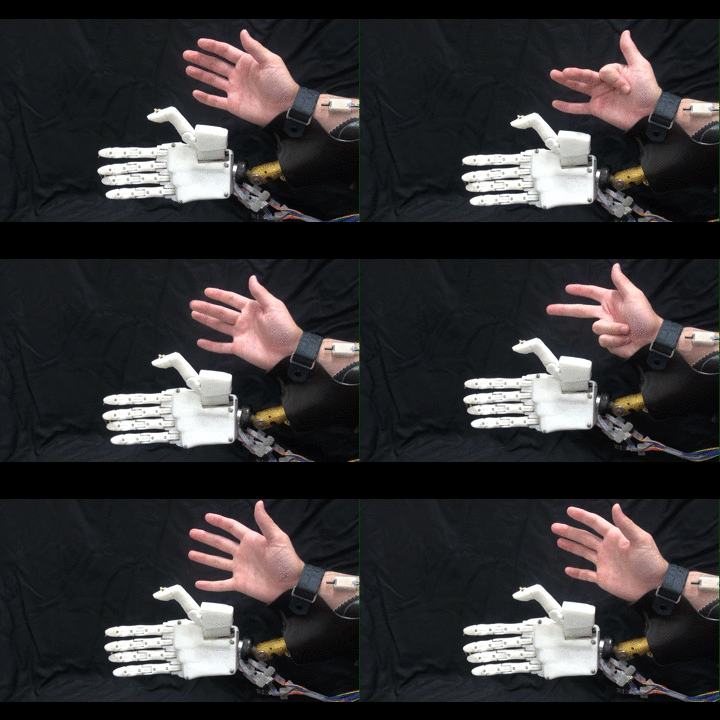
A myoelectric prosthetic hand is a robotic prosthetic hand that uses electromyogram (EMG) signals generated by muscle contraction as control signals. If we can estimate information such as human motion intentions and force application from EMG signals and drive the joints of the prosthetic hand, we may be able to realize movements as the user intends. Therefore, it is attracting attention as a means to improve the quality of life (QOL) of patients who have had upper limb amputations due to accidents. However, most commonly available myoelectric prosthetic hands can only perform simple movements such as grasping and opening, which is insufficient to replace human upper limb function.
Our laboratory is developing high-performance robotic myoelectric prosthetic hands capable of independently driving 5 fingers. In addition to high-precision motion identification algorithms based on EMG signals and machine learning, we aim to realize a system that users can operate intuitively and naturally by introducing control models that mimic human motor characteristics.
Keywords
ProstheticsRoboticsHuman Mimetic